Tamaga Hotel Demo
Tamaga Hotel Demo: compare the rooms, inspect the work
Two adults and two children need somewhere to sleep. The Family Room accommodates four people with one double bed and two single beds. Everyone shares one open sleeping space. That distinction matters before choosing the room.
Tamaga Hotel is a fictional hotel used to demonstrate room information, guest-facing explanations and the work behind a stay. Explore the public pages, inspect their supporting information or follow the dated staff screenshots.
Choose what you want to inspect
The hotel and records are fictional. This demonstration does not provide real reservations, payments or guest messaging.

Which room would suit this stay?
Compare the four room categories, then examine the Family Room’s sleeping arrangement and layout.
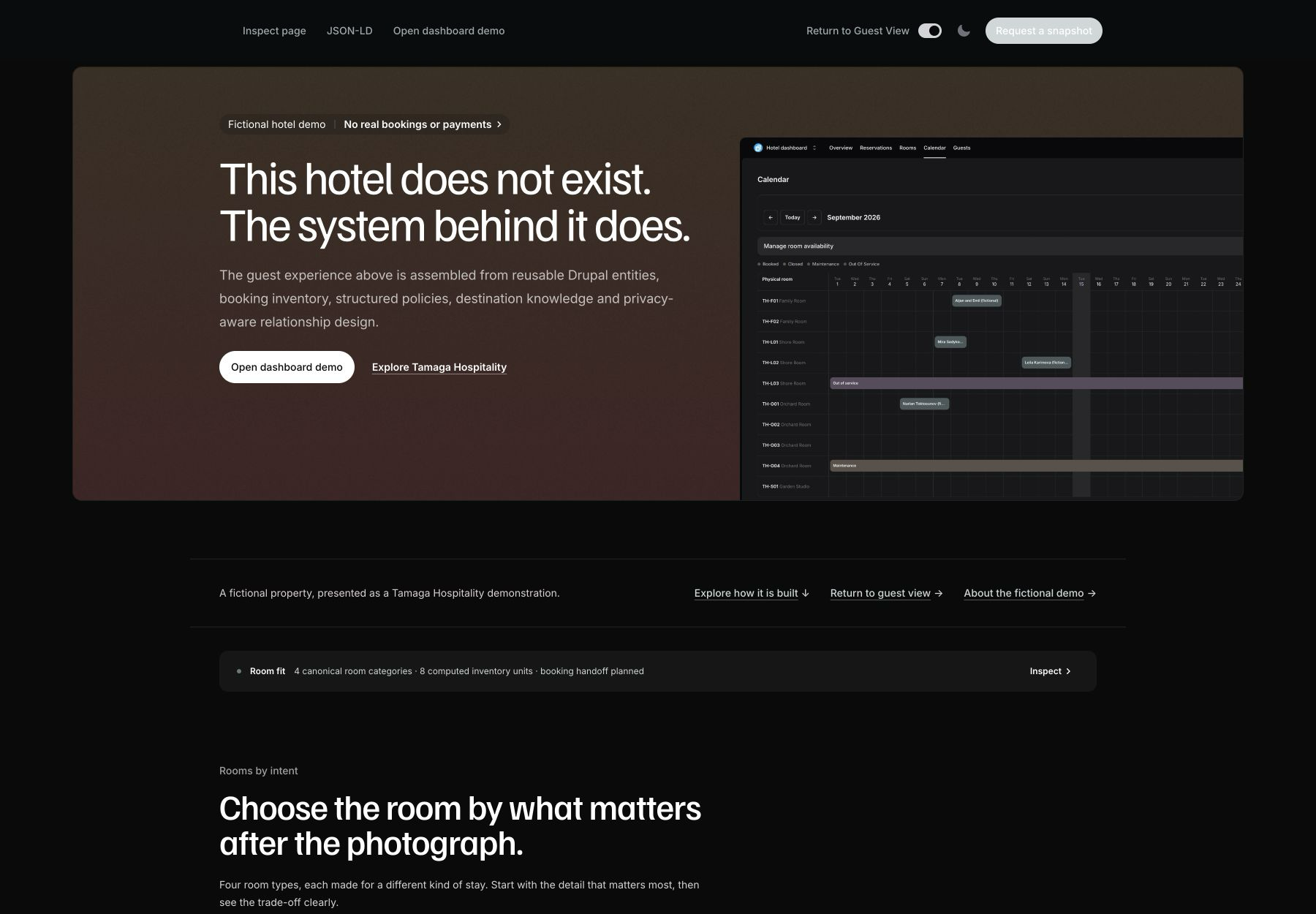

What information supports the public explanation?
Open Host Lens to inspect the records and representations behind the page.
Start with the difference that matters to the guest
The room comparison brings capacity, sleeping configuration, layout, outlook and practical features together.
For the family of four, capacity answers only part of the question. One double bed and two singles provide sleeping places for everyone, while the open layout means parents and children share the room. A family wanting separate bedrooms would need a different arrangement.
Room suitability also remains separate from availability and price for particular dates.
Compare the room characteristics, then inspect the Family Room.
Look behind the published information
Host Lens gives a different view of the same fictional property. It exposes supporting records, sources and generated outputs so a reader can examine how the public explanation is assembled.
Use the room-information view to investigate what supports a claim. Use the technical view to inspect the generated structured data. A valid output does not, by itself, establish that every condition a traveller needs has survived.
Follow the recorded staff tour
How does staff work appear? Follow the recorded calendar, booking-detail and preparation examples below. The public Dashboard preview offers a separate, read-only introduction.
These screenshots capture the local application on 26–28 October 2026. They show fictional records and separate examples rather than one automatically completed guest journey.
Compare the room categories.
The recorded guest-facing comparison shows capacity, sleeping configuration and layout. The current public comparison is available through the link above.
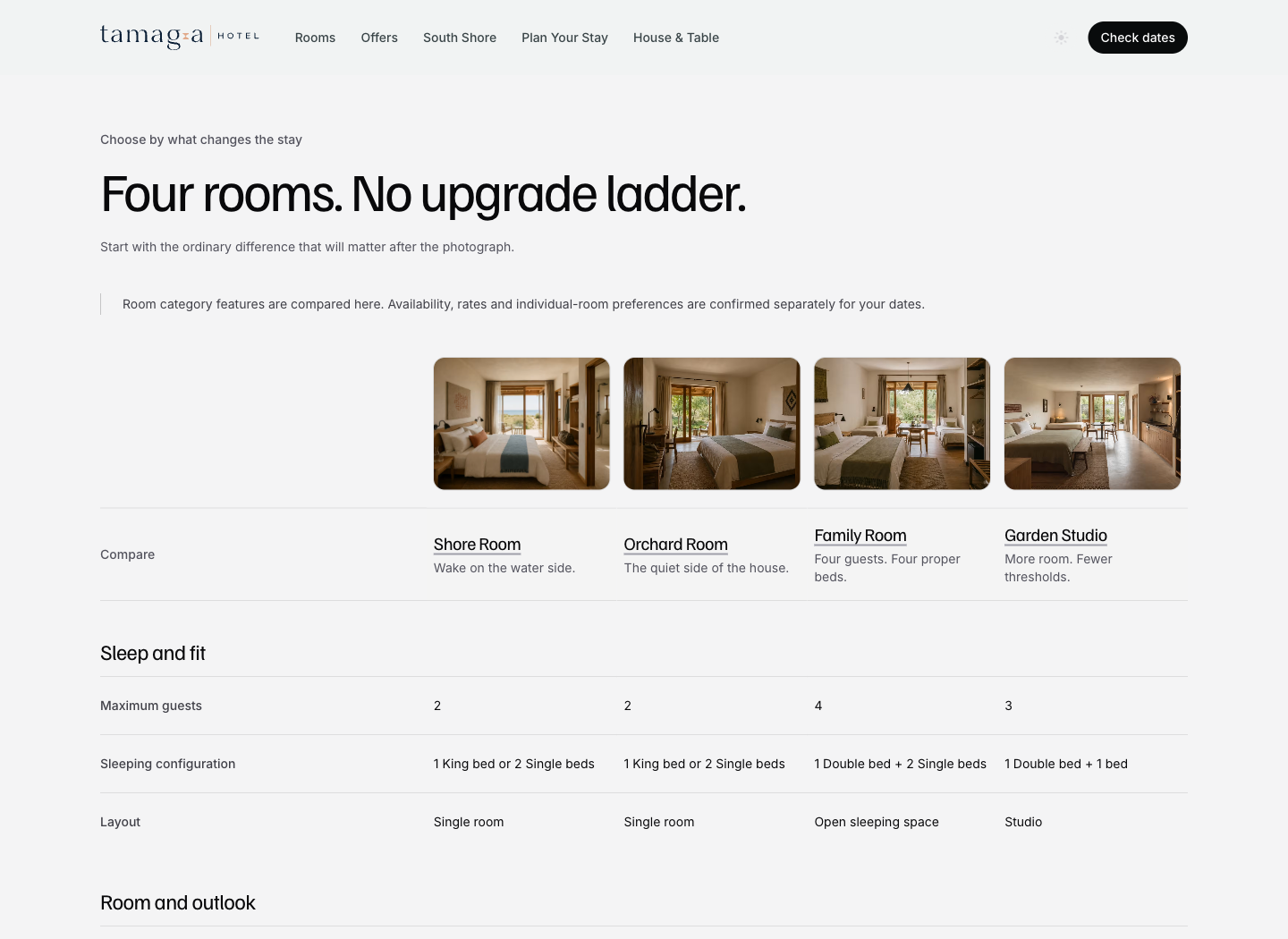
The local guest-facing comparison keeps room capacity, sleeping configuration and layout visible. Captured 28 October 2026 from the local Hotel Demo; fictional records.
Inspect a room allocation.
The September calendar contains four fictional bookings. The linked booking-detail capture shows dates, party size, room category, allocated room and order state. The displayed total belongs to that synthetic example.
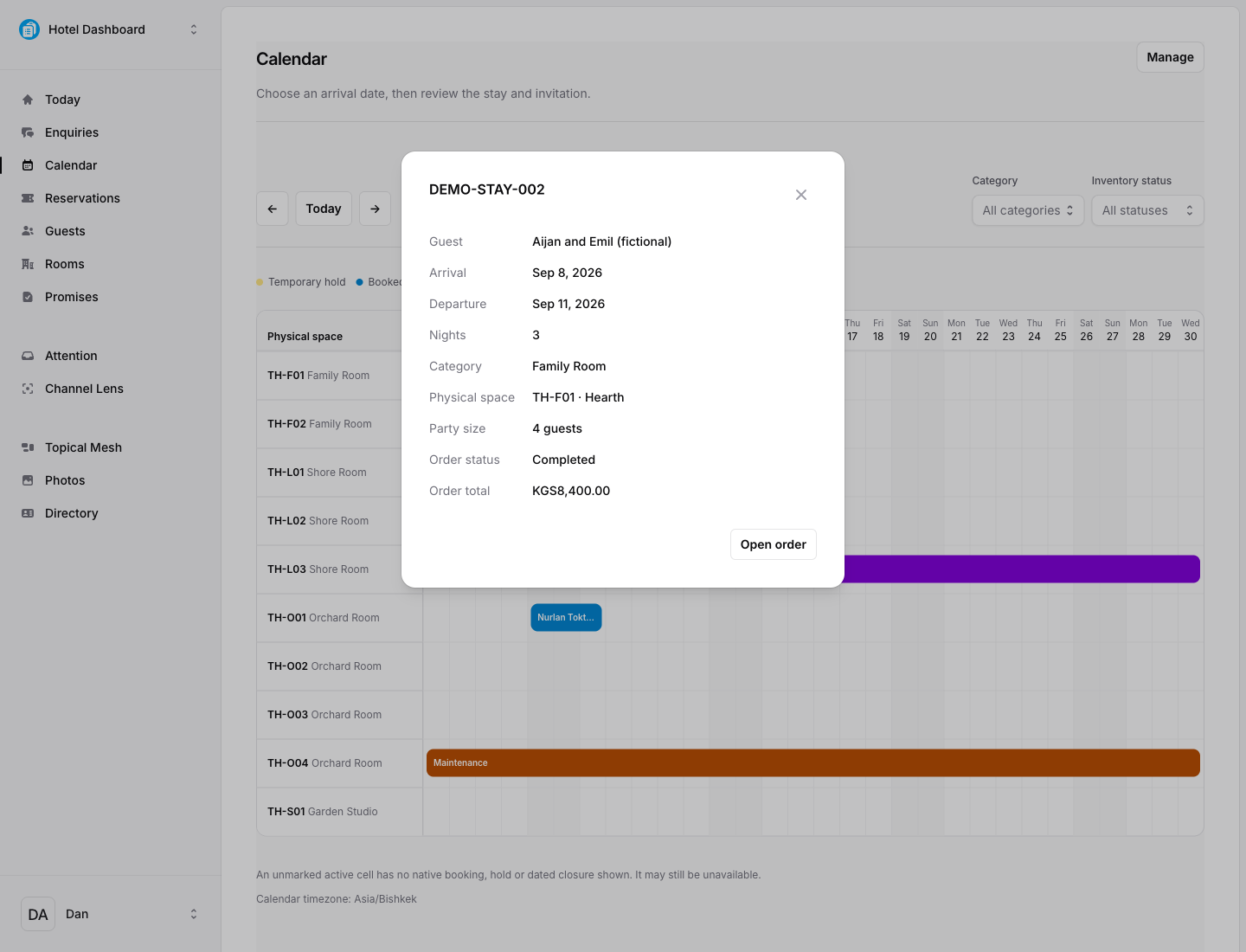
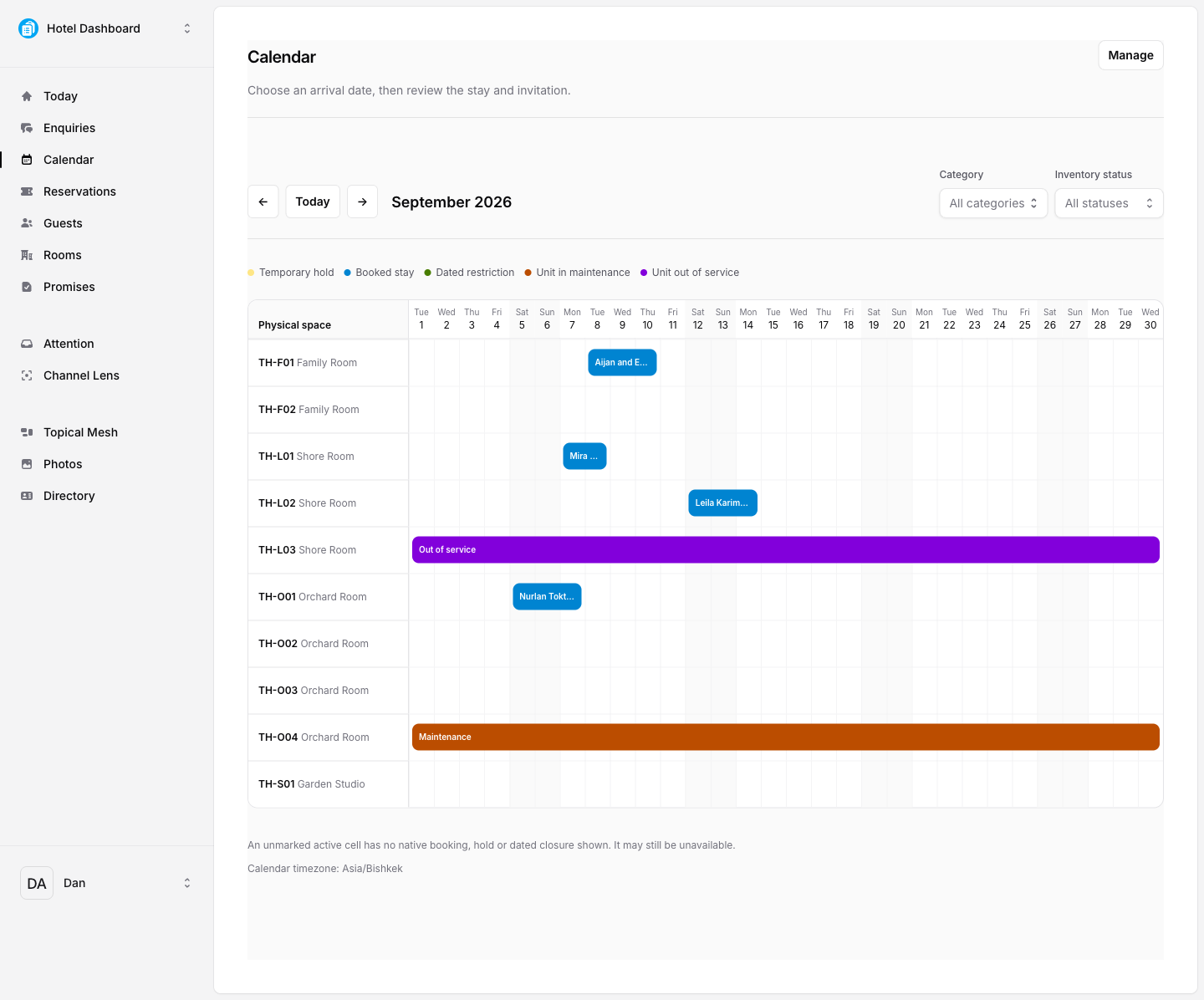
The September calendar shows booked room allocations alongside maintenance and out-of-service rows. Captured on 28 October, it is a historical scenario rather than current occupancy. Captured 28 October 2026 from the local Hotel Demo; fictional records.
Keep unfinished preparation visible.
Nura’s Apricot preparation is blocked while a replacement reading lamp is awaited. Aizada’s instruction remains beside the work. This manually authored example shows the owner, deadline, blocker and retained history.
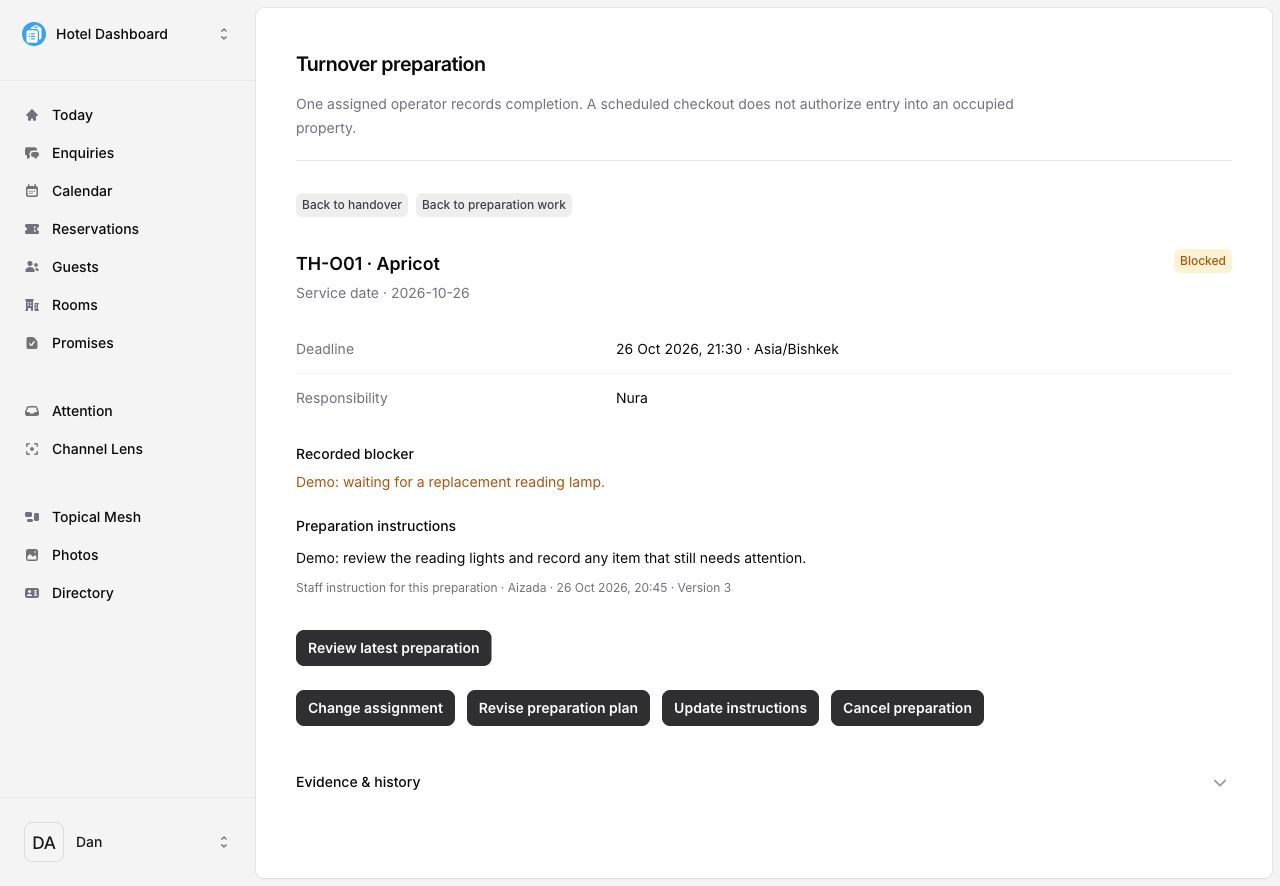
The preparation record retains its owner, deadline, authored instruction and unresolved reading-lamp blocker. Captured 26 October 2026 from the local Hotel Demo; fictional records.
Continue to How it works for preparation history and the separate guest-context explanation.
For an anonymous introduction, open the read-only Dashboard preview. It does not grant access to the staff workspace.
Examine the recorded arrival example
In the documented release scenario, the family expects to arrive at 23:30. The house requires written confirmation after 20:00. Receiving the request therefore leaves an arrangement unresolved.
The guest request and the staff work have distinct states. An authorized person must confirm or decline the arrangement; receiving or acknowledging it does not supply that decision.
The recorded representation example examines what happens when the confirmation condition disappears from another description. Read the Channel Lens explanation for the distinction between an observation, a historical capture and an assessment. The public comparison experiment has been retired.
The August reference captures and October staff screenshots retain their own dates and contexts. They should be read as evidence of those recorded software states.
August reference captures
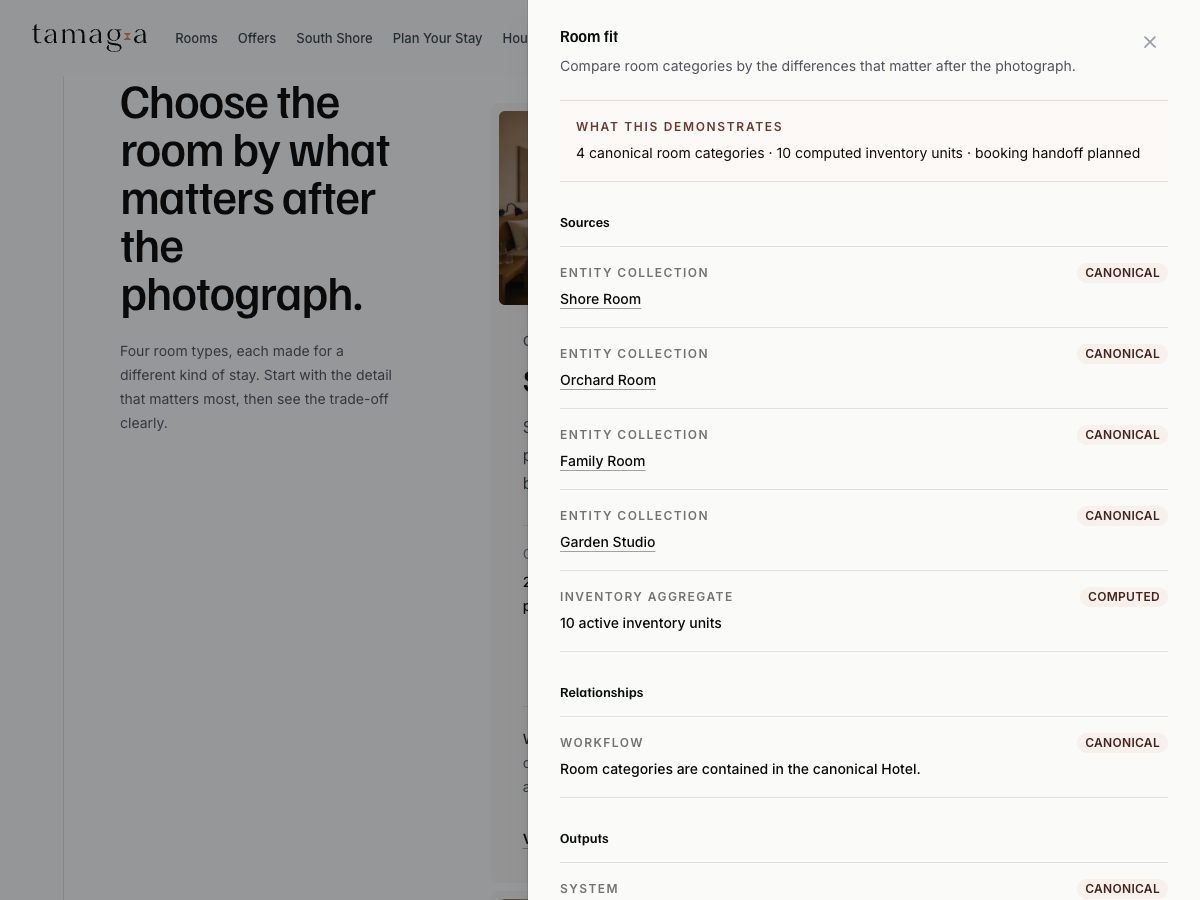
Saved demonstration screenshot. Source proof last checked 12 August 2026. Historical fictional release; not a live operational view.
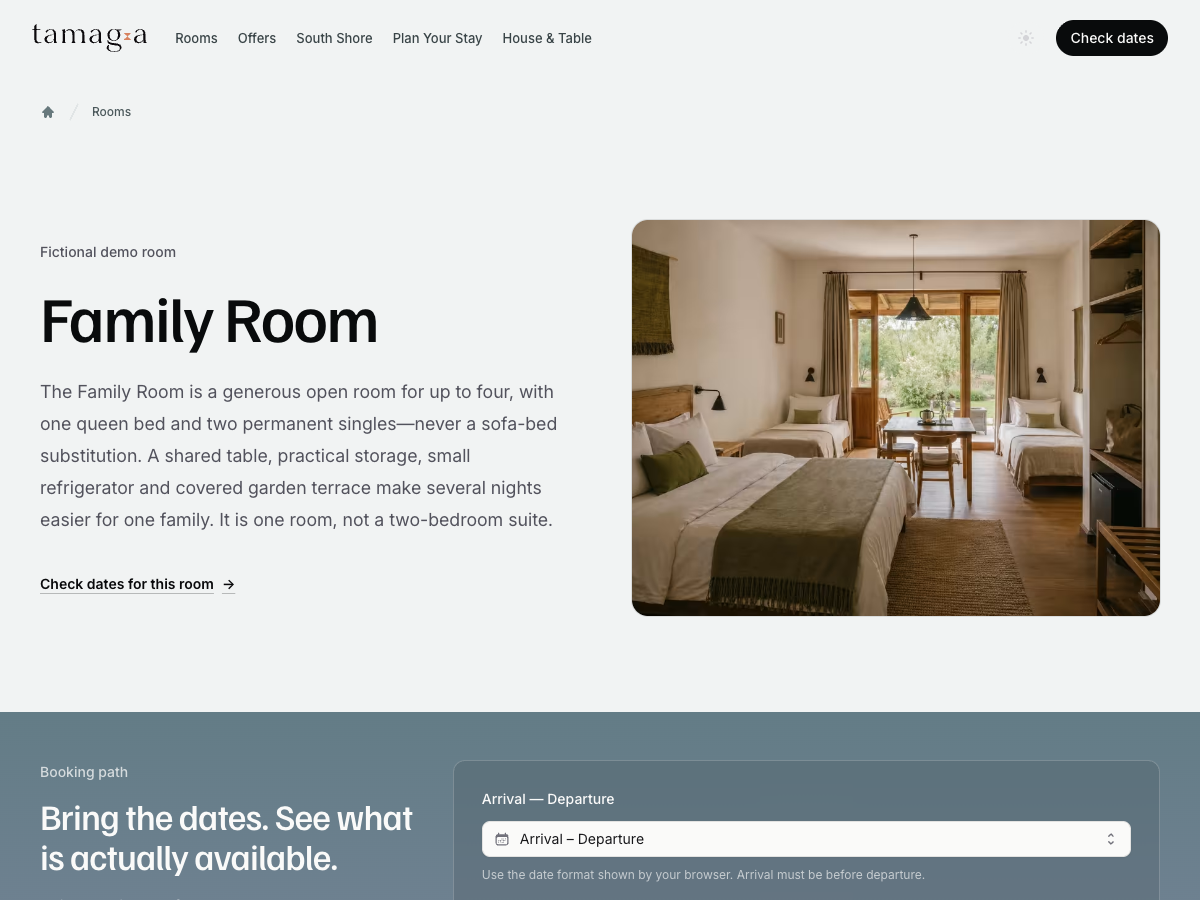
Saved demonstration screenshot. Source proof last checked 12 August 2026. Historical fictional release; not a live operational view.
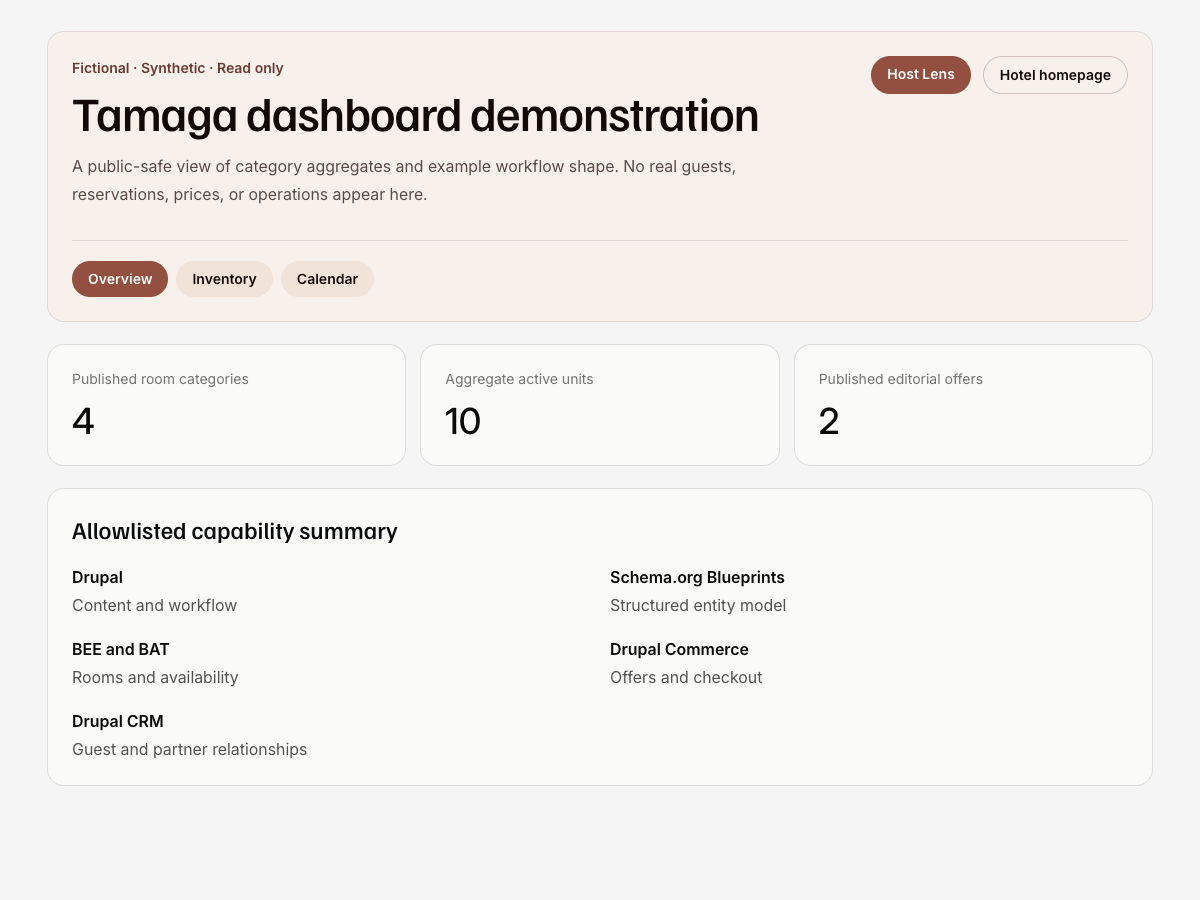
Saved demonstration screenshot. Source proof last checked 12 August 2026. Historical fictional release; not a live operational view.
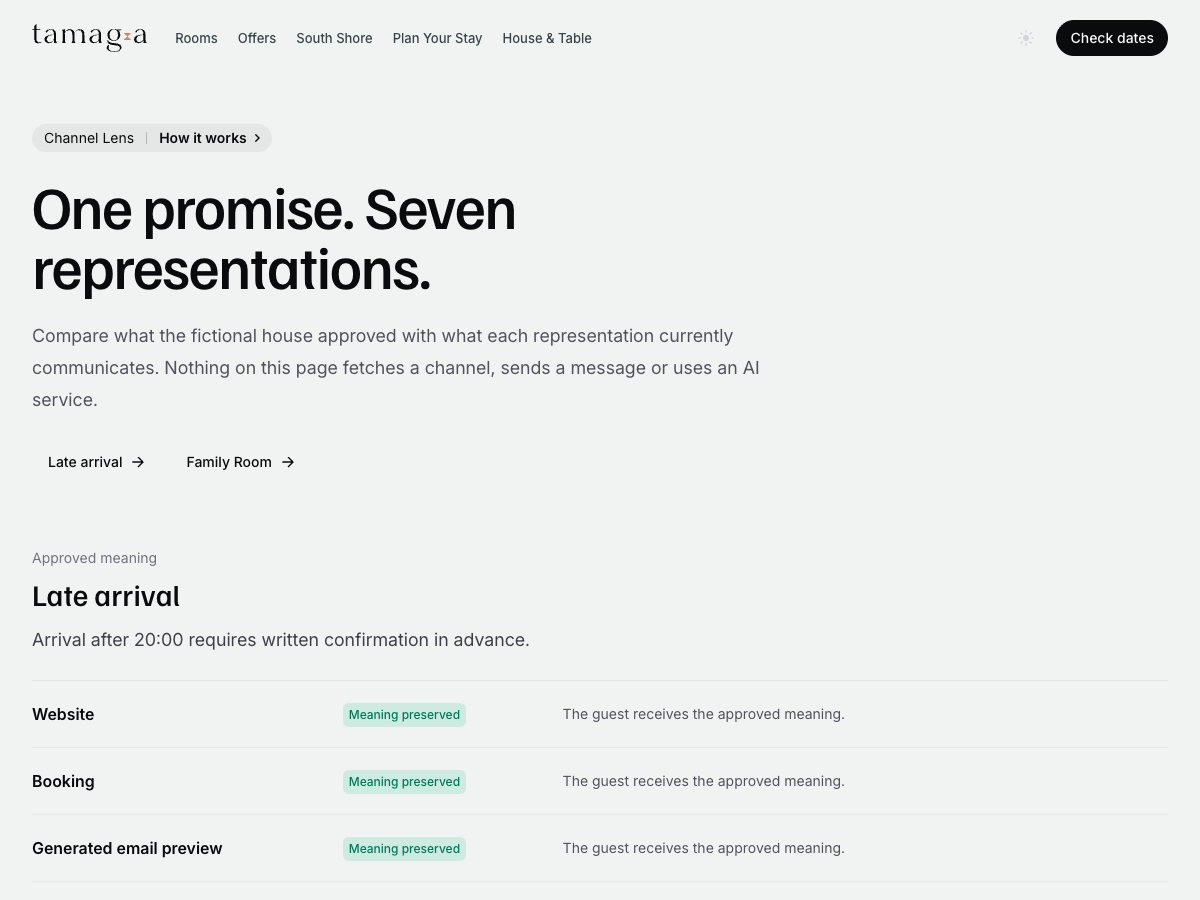
Saved demonstration screenshot. Source proof last checked 12 August 2026. Historical fictional release; not a live operational view.
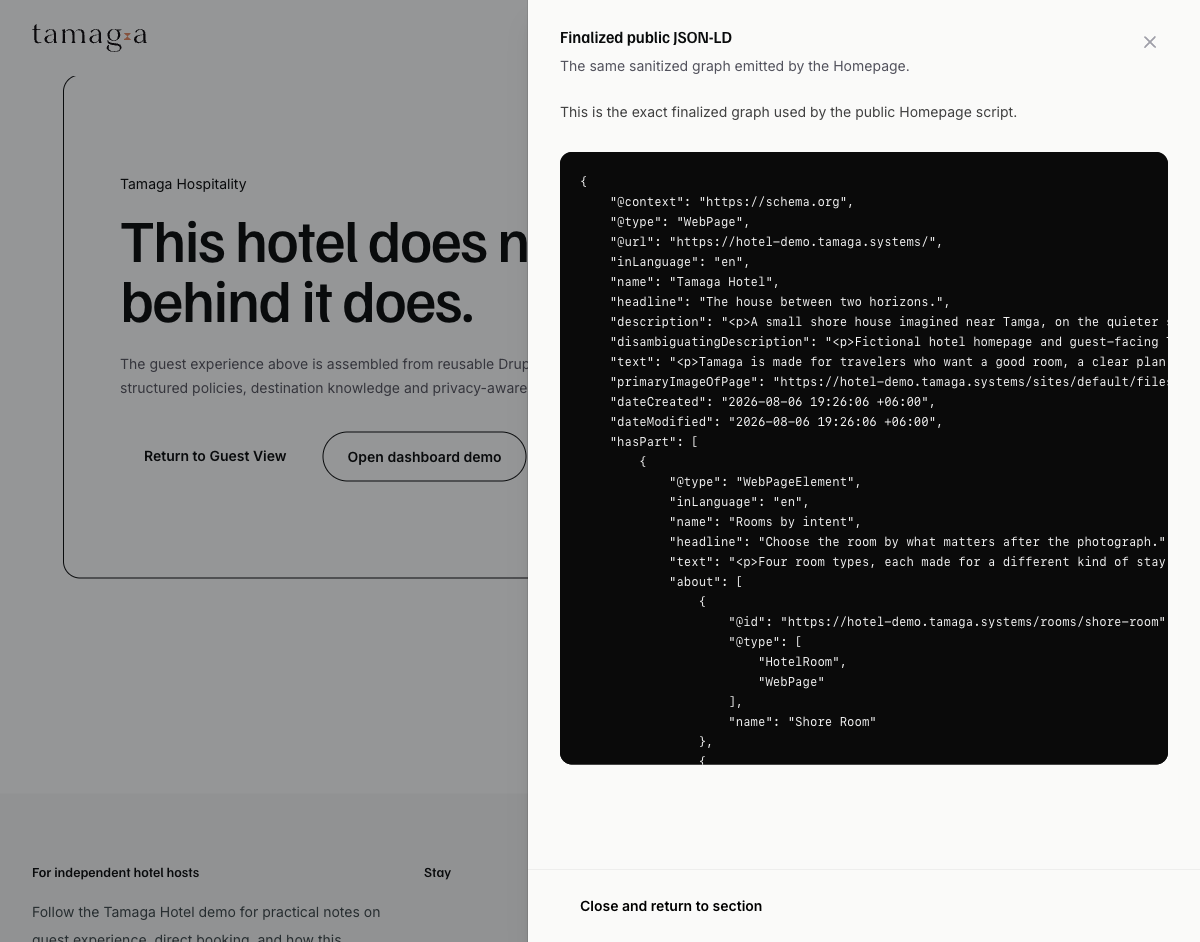
Inspect the finalized public WebPage graph as an output of the governed model, not as its source of truth.
Saved demonstration screenshot. Source proof last checked 09 August 2026. Historical fictional release; not a live operational view.
Release context
Choose the next useful step
Read How it works to follow the distinctions between approved wording, a guest request and responsible staff action.
Explore Integrations to understand how Tamaga could fit alongside existing hotel systems.
For your own independent hotel or guesthouse, a Seven-Version Snapshot examines one consequential guest promise across selected representations and returns a human-reviewed repair map.