Glossary / Newsroom
Proof-Led Newsroom
A proof-led newsroom connects an organization’s published stories with the sources, media permissions and contacts people need to check and reuse them.
For a tourism organization, this means helping a journalist find the programme behind an announcement, a partner identify which photographs they may use, or a traveller reach the current visiting arrangements.
What makes it proof-led?
A story becomes easier to use when readers can answer the questions it raises:
- What supports the statement? An identifiable document, contributor or observation, with relevant dates and limitations.
- What can I reuse? Photographs and quotations with captions, credits and clear usage conditions.
- Where do I continue? Current practical information, deeper background or the right contact.
- What happens when something changes? A correction policy and a way to report an error or outdated detail.
“Proof-led” describes this connection between the story and its support. A source may substantiate a statement, qualify it or leave an important question unresolved. The published wording should preserve that distinction.
A media kit can organize reusable descriptions and materials. A Source Room can explain the organization’s source practices, evidence boundaries and correction policy. Their value comes from answering the reader’s next question where it arises.
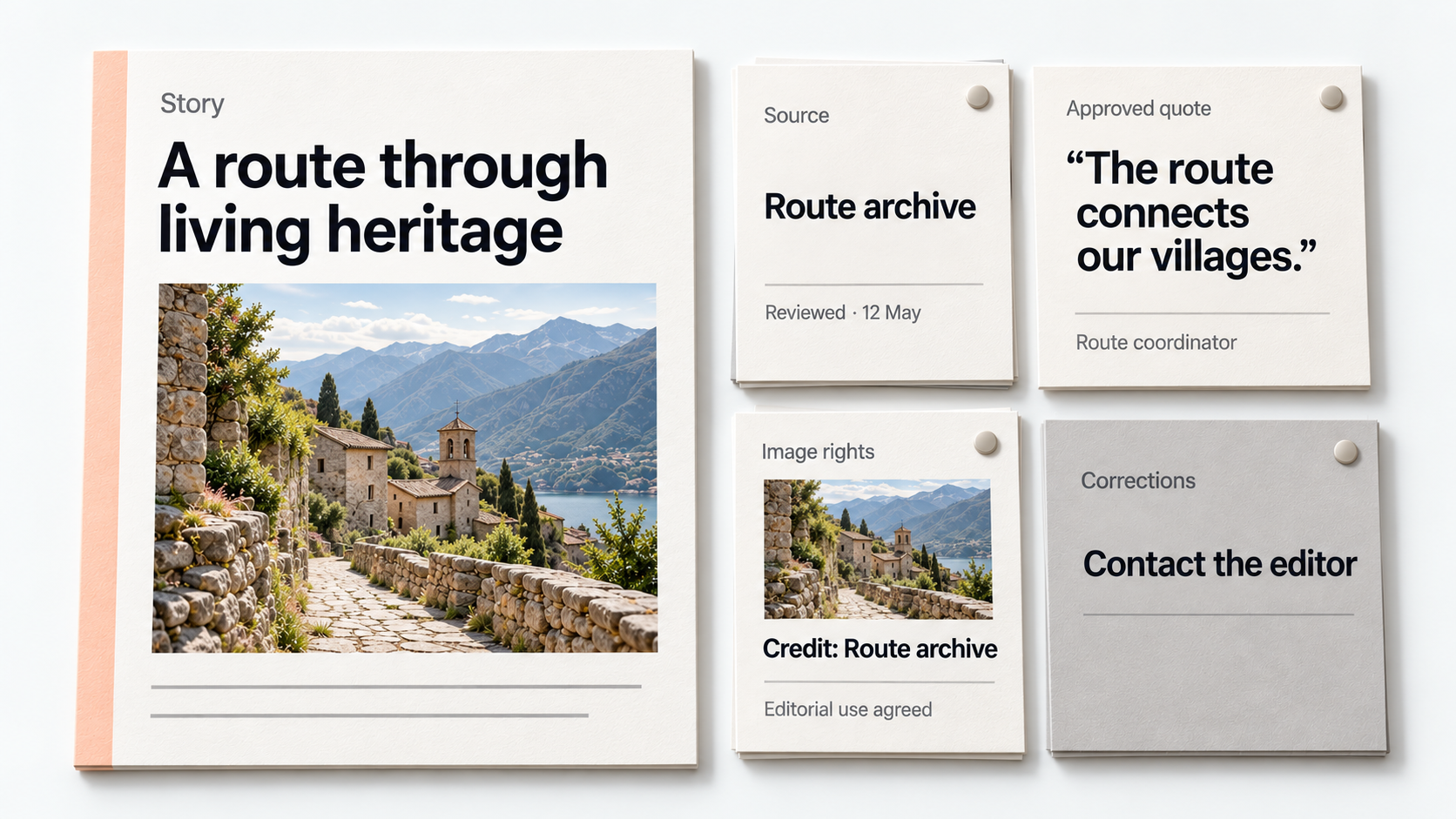
A tourism example
Imagine a fictional cultural route announcing Saturday visits to three craft workshops.
The story introduces the makers and explains what connects their work. Its supporting programme identifies the participating workshops, visiting dates and reservation conditions. Photographs carry captions, creator credits and permitted uses. A practical link takes visitors to the current arrangements.
A journalist can check the announcement and request further information. A partner can identify suitable material for reuse. A visitor can understand how to take part.
If the programme changes, the current visiting information is updated and the dated announcement can explain the change. Readers can distinguish the original announcement from the arrangements that now apply.
See an example or explore the system
Tamaga’s Newsroom connects publications with research material, media kits and source policies. It provides an example of the structure you can inspect.
For how this could be organized around your own publications, photographs and supporting documents, explore Proof-led Newsrooms.